Gutting world health in favor of a gilded ballroom only Trump wanted

Until recently, the United States was the biggest funder to the World Health Organization. Ten months after Trump announced the U.S. was withdrawing its membership, WHO just announced it must let go of 2,371 workers, about one-quarter of its workforce.

Trump estimates a cost of $300 million for the ballroom that will replace his unauthorized demolition of the White House’s East Wing.

That is more than the $218 million the United States paid in the two years of 2022 and 2023 as its assessed member contribution to WHO. In addition, the U.S. voluntarily gave $47 million to WHO’s emergency fund. Those two figures add up to $265 million. Total voluntary contributions from the U.S. in those two years amounted to $1.02 billion.

The Bill and Melinda Gates Foundation chipped in another $826 million.

China’s voluntary contribution in those years was $41 million.

We now have sunk below even that paltry sum.

Sources:

https://www.theguardian.com/world/2025/nov/19/world-health-organisation-to-cut-jobs-due-to-us-withdrawing-funding

https://www.visualcapitalist.com/visualized-who-funds-the-world-health-organization/

https://www.statista.com/chart/33800/top-contributors-to-the-world-health-organization/

To America’s eight richest billionaires: Buy yourselves some goodwill.

The eight richest people in the country could fund SNAP, which provides food benefits to 42 million low-income families and individuals, for almost two months by donating 1 percent of their net worth. This would amount to $15.79 billion.

Elon Musk, net worth $342 billion; 1 percent: $3.42 billion
Mark Zuckerberg, net worth $216 billion; 1 percent: $2.16 billion
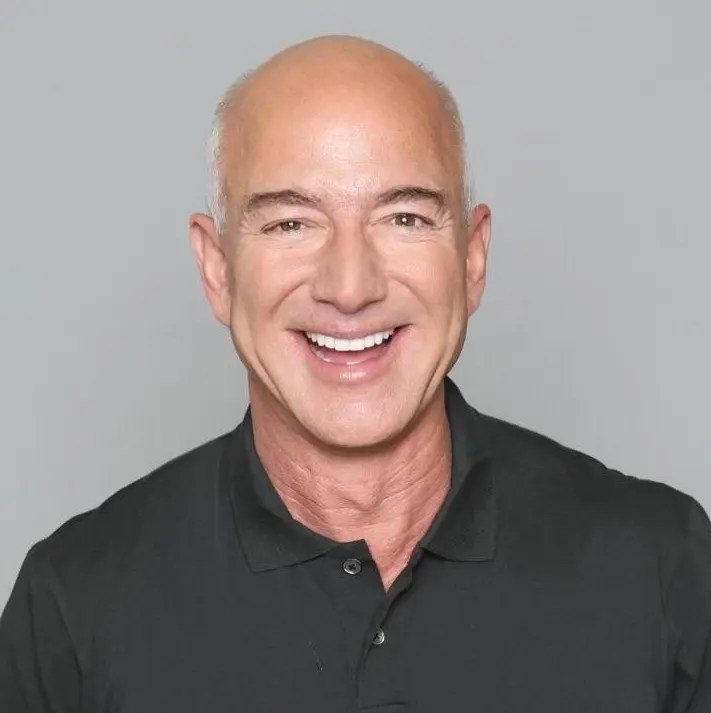
Jeff Bezos, net worth $215 billion; 1 percent: $2.15 billion
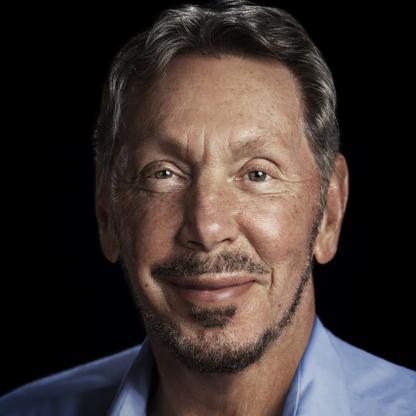
Larry Ellison, net worth $192 billion; 1 percent: $1.92 billion
Bernard Arnault and family, net worth $178 billion; 1 percent: $1.78 billion
Warren Buffet, net worth $154 billion; 1 percent: $1.54 billion
Larry Page, net worth $144 billion; 1 percent: $1.44 billion
Sergey Brin, net worth $138 billion; 1 percent: $1.38 billion

The average monthly SNAP benefit is $187 a month per person. Households can’t have more than $3,000 to $4,500 in available cash (a bank account) and net income that is at or below the poverty line to qualify. The 2025 poverty line varies from $15,650 for a single person to $67,710 for a family of eight in Alaska, the state where benefits are highest. Trump is cutting SNAP benefits in half.

Jimmy Chen of Brooklyn, N.Y. started a company called Propel that provides a free app to 5 million SNAP recipients, who use it to manage their benefits. He has partnered with the nonprofit GiveDirectly to raise money and funnel it to people on SNAP.

For what would be a pittance to them, America’s eight richest billionaires have an opportunity to help millions of the country’s poorest, many of them children and seniors. We don’t need a gilded ballroom at the White House. We need those who have benefited the most from our economy to step up.

Sources:

https://www.forbes.com/billionaires/

https://www.newsweek.com/snap-benefits-november-2025-payments-update-shutdown-trump-10990656

https://www.cbpp.org/research/food-assistance/a-quick-guide-to-snap-eligibility-and-benefits

https://aspe.hhs.gov/topics/poverty-economic-mobility/poverty-guidelines

https://www.npr.org/2025/11/04/nx-s1-5587728/snap-shutdown-propel-tech-startup-cash-donations

Trump’s $300 million ballroom: What else could that money buy?

How about daycare for the children of single mothers? The average cost of it in this country is $343 per week, or $16,464 a year. Even with just one child, that would take a mighty bite out of the single mother’s average yearly earnings of $39,120. Instead of a gilded ballroom, that $300 million could provide a one-year $6000 daycare subsidy for 50,000 single moms. This could help change lives for the better.

Or, that $300 million could pay tuition at community colleges, which averages about $5200 a year. Another 57,692 lives changed for the better.

Or, that $300 million could be invested in CHIP, the Children’s Health Insurance Program, or WIC, the Women, Infants and Children food program. Another 42 million lives changed for the better.

That would be a legacy any president could take pride in.

“What can anyone do about it?”

Between Oxfam’s report claiming that 1 percent of the world’s population will soon own 50 percent of its wealth and perennial presidential candidate Mitt Romney’s new packaging as an anti-poverty warrior, it’s understandable if most people just want to throw up their hands (and maybe their latest meals) in utter frustration, discouragement and anger.

Naturally, if you’re not among the 1-percenter billionaires, it’s easy to think that no individual could possibly make a difference in anything. But that kind of I’m-on-my-own thinking is precisely what keeps people from acting. It’s no coincidence that those few at the top of the income scale insist that individuals alone are responsible for overcoming all obstacles to improving their situations, that unions and government regulation threaten freedom and that their own advantages of wealth, the best schools and knowing the right people had nothing to do with their success.

But we’re not helpless.

Take one hour a week and do the following:

1. Pick a couple of potential candidates for elective office and find out how they voted in the past on taxes, regulation of banks and Wall Street, student loans, unemployment insurance, the minimum wage, Medicaid, corporate incentives and other pocketbook issues. Never mind what they say. Past actions, not campaign promises, are the best predictors of what they’ll do in the future.

2. If you find a candidate whose voting record pleases you, spend that weekly hour working for his or her campaign.

3. Don’t overlook people running for local offices. They have a great impact on where you live.

And just for fun, take a look at how self-described capitalist tool Forbes magazine tries to discredit the statistical validity of Oxfam’s findings. Using Oxfam’s charts, Forbes proclaims that there isn’t enough data to reliably predict when or if Oxfam’s 50-percent conclusion will come true. What the charts show has already happened, however, is that between 2000 and 2014 the world’s 1-percenters owned between 44 percent and almost 49 percent of the globe’s wealth.

http://www.forbes.com/sites/timworstall/2015/01/20/oxfams-still-wrong-about-the-global-1-and-all-economic-growth-flowing-to-them/

http://www.oxfam.org/en/pressroom/pressreleases/2015-01-19/richest-1-will-own-more-all-rest-2016


BS buster – “Asset poor”

Okay all you 99 percenters, which of the following describes you: “Income poor,” “asset poor,” “liquid asset poor?” All of the above?

The Corporation for Enterprise Development (CFED), a seemingly well-meaning think tank in Washington,  just released a report classifying the population of all 50 states according to the sliced-and-diced categories listed above. The meanings of these terms are apparent. Less obvious is whether sorting people into such categories is useful.

I assume the goal is to help craft policy solutions appropriate for each category, and will contact the CFED for an explanation.

In the meantime, does anyone else worry that this focus on the trees might obscure what’s going on with the forest? Could it possibly reveal that factors other than joblessness, tax policies, unregulated financial shenanigans, union busting, inadequate wages, medical expenses and a broken housing market are to blame?

Finally, “asset poor” has the same kind of ring to it as that other, older euphemism for the poverty-stricken: “underprivileged.” Barbara Bush, in a fine example of 1-percenter cluelessness, used the term in 2005 to explain why homeless Hurricane Katrina refugees should be happy to shelter on cots in the Houston Astrodome: They “were underprivileged anyway, so this is working very well for them.”

It’s all too easy to imagine pundits, politicians and policy wonks using these latest terms in ways that obscure problems, rather than reveal solutions. You aren’t jobless or paid less than a living wage, you’re income poor! You aren’t homeless, you’re asset poor! You aren’t broke, you’re liquid asset poor! 

Try using those terms when bill collectors call.

“W” magazine drops into a world of hurt

The waiting room in the community mental health center of Gary, Ind. features the accessories common to places where poor people go for treatment: a sign instructing all to register with the security guard; a row of art-therapy paintings hanging crooked which nobody ever bothers to straighten; patients from the residential program shuffling aimlessly, muttering; out-patients slumping in worn chairs, waiting for their appointed sessions with overworked therapists and harried social workers.

It’s not the kind of place one expects to find a copy of the glossy, couture fashion magazine “W.”

It looked obscene lying there all shiny on a scuffed table, with a cover picture of blond actress January Jones in a designer bathing suit, now surrounded by the overweight poor, the hopeless poor, the self-destructive poor and the needy poor.

This particular issue was devoted to DESIGN NOW – “The World’s Richest Man Builds a Museum” and “At Home with Fashion Darling Alexander Wang.” None of the waiting clients, clad in worn items from thrift-store dollar bins, seemed interested enough in the magazine’s self-proclaimed World of Style to pick it up and thumb through it.

They missed the diamond-necklace ad from Cartier with the tagline, “All about you forever.” They didn’t see fashion designer Hubert de Givenchy posing in his palatial Paris apartment while talking about “that moment in life where all you want is a simple room with two or three things in it.” This was right when he auctioned off $20 million of antiques from his collection.

I can imagine the reaction from those in the waiting room: “Uh-huh, I know jus’ what the man mean, I got so much shit layin’ around, me and the kids and the grandbabies can’t hardly move ‘thout trippin’ over it.”

Page after expensively produced page showed must-haves such as a bracelet of 18k gold, black jade, pearls and diamonds for $48,500 , a dress for $3,025 or a darling little clutch for $2,000.

Whoever brought that magazine into the community mental health center had ripped off the part of the cover containing the address label, probably to protect her privacy. It’s doubtful she gave any thought to the cruelty of leaving that celebration of wretched excess among the merely wretched.